Introduction
Load lines, also called the Plimsoll mark, show the maximum depth to which a ship may be loaded in different seasons and waters. They keep enough freeboard and reserve buoyancy for the ship to stay safe at sea. The rules come from the International Convention on Load Lines. In the United Kingdom, Samuel Plimsoll campaigned for them, and the mark is named after him.
Deck Line
The deck line is a horizontal line 300 mm long and 25 mm wide, painted amidships on both sides. The top edge of the deck line indicates where the top of the freeboard deck would meet the outer side of the shell plating.
Plimsoll Mark (Load Line Mark)
The Plimsoll mark is below the deck line. The vertical distance between them is the statutory summer freeboard, measured from the upper edge of the deck line to the upper edge of the summer line. The deck line and the Plimsoll mark are situated exactly amidships.
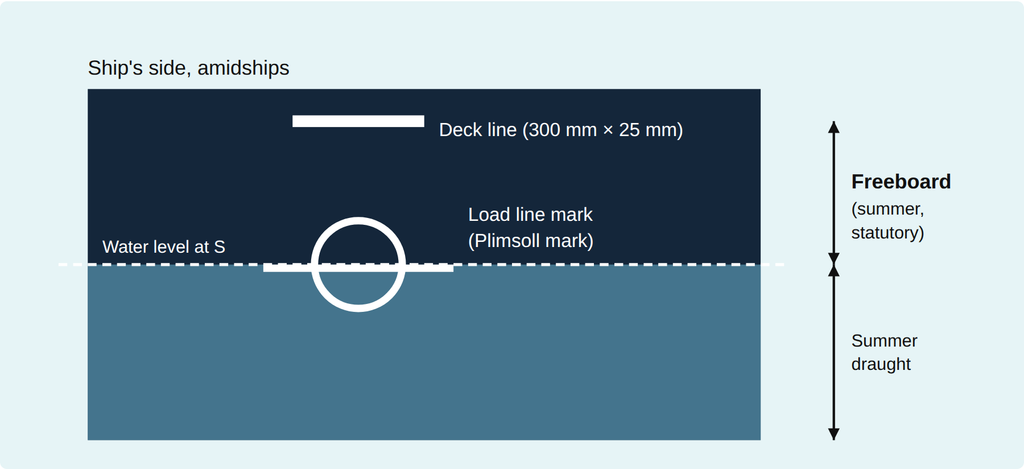
Figure 1. Freeboard is measured from the upper edge of the deck line to the upper edge of the load line.
Dimensions of the Mark
- A ring with an outer diameter of 300 mm, painted 25 mm thick.
- A horizontal line 450 mm long and 25 mm thick through the ring. Its upper edge passes through the centre of the ring and indicates the summer level.
- A vertical line 25 mm thick, 540 mm forward of the centre of the ring.
- The load lines are 230 mm × 25 mm and are marked against this vertical line. The T, S, W and WNA lines extend forward of it; the fresh water lines (F and TF) extend abaft it, towards the ring.
- The upper edge of each line indicates its exact level. The summer line is in line with the upper edge of the line through the ring.
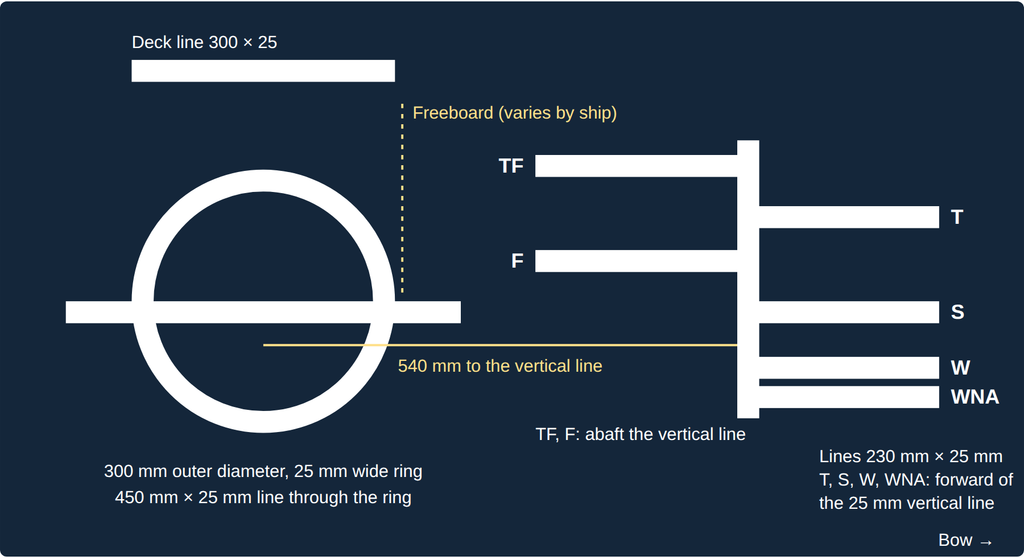
Figure 2. The mark is painted on both sides amidships. Vertical positions of the lines are not to scale.
The assigning authority may mark its initials above the horizontal line of the ring, for example LR for Lloyd’s Register. The ring, lines and letters are painted in white or yellow on a dark hull, or in black on a light hull, and are permanently marked so they stay visible.
The Load Lines
- S: summer line (salt water)
- W: winter line
- T: tropical line
- F: fresh water line (summer)
- TF: tropical fresh water line
- WNA: winter North Atlantic line
Vertical Distances Between the Lines
- Between S and T: 1/48 of S.D.
- Between S and W: 1/48 of S.D.
- Between S and F: FWA (fresh water allowance)
- Between S and TF: FWA + 1/48 of S.D.
- Between F and TF: 1/48 of S.D.
- Between W and WNA: 50 mm
All of these are measured from upper edge to upper edge.
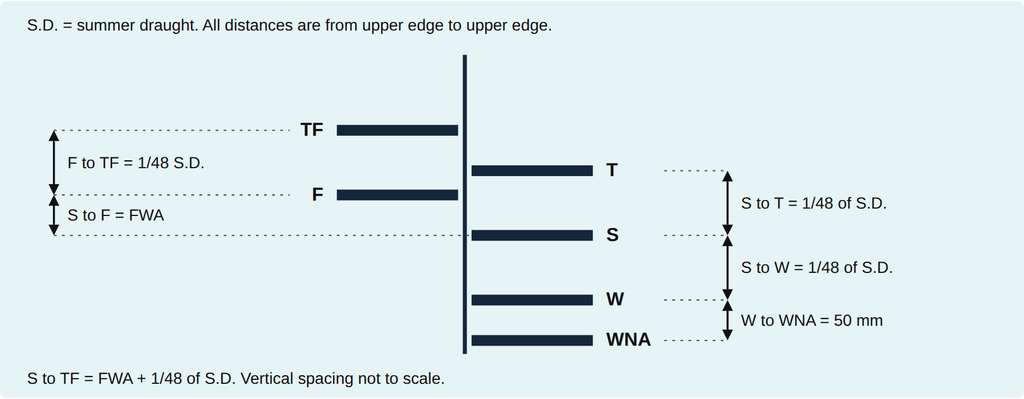
Figure 3. The seasonal and fresh water lines are placed above or below the summer line.
Worked Example
A ship has a summer draught of 9.6 m and an FWA of 150 mm. Then 1/48 of S.D. = 9.6 / 48 = 0.2 m, so:
- Tropical (T): 9.6 + 0.2 = 9.8 m
- Winter (W): 9.6 − 0.2 = 9.4 m
- Fresh water (F): 9.6 + 0.15 = 9.75 m
- Tropical fresh water (TF): 9.75 + 0.2 = 9.95 m
- Winter North Atlantic (WNA): 9.4 m less 50 mm = 9.35 m
Winter North Atlantic (WNA) Mark
The WNA mark is required only for vessels of 100 m or less in length trading in the North Atlantic during the winter season. It is marked 50 mm below the winter line.
Which Line Applies?
The line you may load to depends on where and when the ship sails, and on the density of the water.
- The Convention divides the world into tropical, summer and winter zones and seasonal areas. The line for the zone and season in which the ship sails must not be submerged in salt water.
- In fresh water the ship floats deeper, so the F or TF line is used. In water of density between salt and fresh water, a dock water allowance applies. These allowances are calculated from the FWA formula in the stability formulae article.
- A ship leaving a river or inland port may be allowed to load deeper by the weight of fuel and other consumables to be used before she reaches the sea.
Timber Load Lines
Ships assigned timber freeboards have a second set of lines marked abaft the vertical line, with the letter L in front, for example LS and LW. They allow deeper loading because timber carried on deck adds buoyancy and protection.
Surveys and Certificate
The ship receives an International Load Line Certificate from the assigning authority. The marks are checked at surveys, usually every year, and the certificate is renewed at intervals of not more than five years. The marks on the hull must match the certificate and the freeboard calculation, and must not be altered without approval.
Conclusion
The load line mark tells everyone, at a glance, how deep the ship may be loaded. Know where each line sits, how it is measured, and which one applies to your voyage. Never load so that the line for your zone, season and water type is under the surface.
Read more:
Understanding GNSS in Maritime Navigation: Complete Guide for Mariners
Leave a Reply